
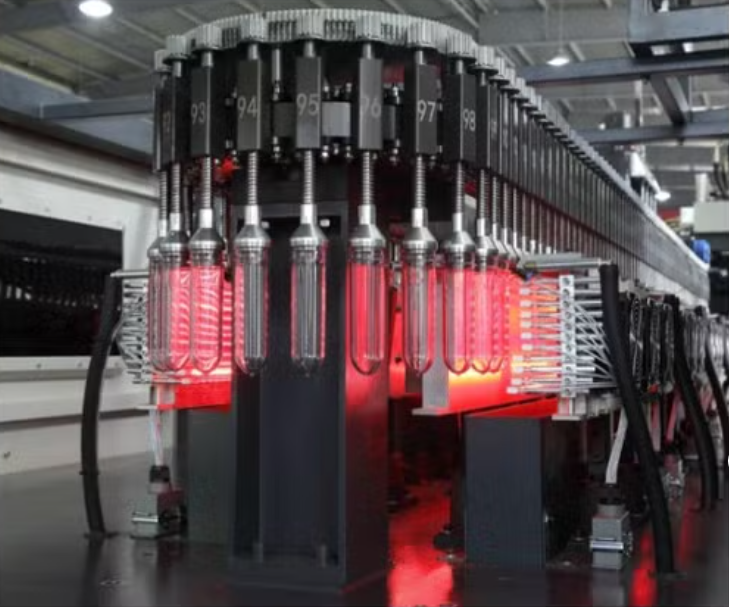
Keeping Your Krones Contiform Blow Molders Running Smoothly
If you’ve spent any time managing PET preform ovens, you know the struggle. It’s a constant tug-of-war between pushing for faster cycle speeds and trying to keep your energy bills from skyrocketing. On a Krones Contiform line, the IR radiator bulbs are the parts that take the biggest beating. When those bulbs start to dim or burn out, you’ll notice it immediately in your bottles. You get those annoying thin spots in the walls that make the whole batch look off. That’s why we made our replacement radiators simple. They’re direct drop-ins. You swap them out, save some money on maintenance, and get your heat distribution back to where it should be. Let’s talk power. These things run on high voltage—usually 230V or 400V—to get the wattage needed to heat preforms fast. We use a compact quartz tube to create that intense, short-wave infrared radiation that actually penetrates the PET. But here is the catch: you have to match the voltage to your machine’s transformer exactly. If you get it wrong, you’re looking at one of two problems. Either the preforms won’t get hot enough, or you’ll blow the filament in a matter of minutes. Not a great way to start a shift. The gear inside We use heavy-wall quartz glass because these bulbs go through a lot of thermal shock during rapid cycling. Most of our units use R7s or Sk15 connectors. We stick to these standards so the bulb sits perfectly in the socket. No wobbling, no arcing, no headaches. Some of our versions even have a special coating. Instead of letting heat bleed backward into the oven housing, it pushes everything forward into the preform. It’s a simple tweak, but it makes a huge difference in heat density. One last thing… A high-output bulb is great, but it puts a lot of pressure on your cooling system. If your ventilation is clogged with dust or your fans are on their last legs, these bulbs will run way hotter than they’re supposed to. That’s the fastest way to kill a filament. Before you wire up a new set of radiators, just take a second to make sure your airflow is clear. It’s a small step, but it’s the only way to make sure your quartz lasts as long as possible.