
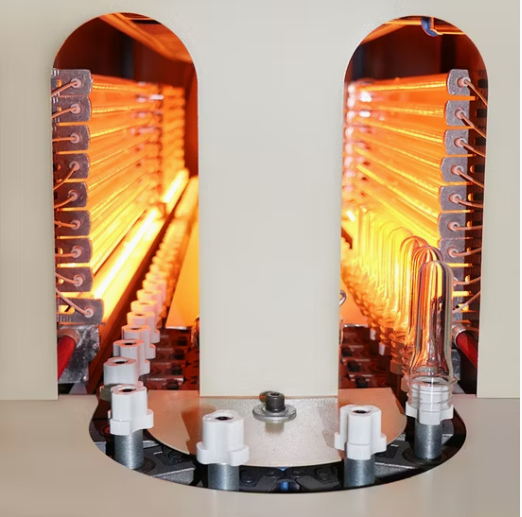
Getting Your Sidel Matrix IR Lamps Just Right
Here is the problem when you swap out lamps in a Sidel Matrix or SIG Blomax 4: if the temperature curve shifts even a tiny bit, you’re in trouble. A small slip in wattage or spectral output means your preforms aren’t heating evenly. That’s how you end up with weird wall thickness or, even worse, bottles that burst. It’s a headache nobody wants. That’s why we built our replacement lamps to act exactly like the ones that came from the factory.
It’s All About the Heat
We don’t just look at the length and voltage and call it a day. We’re obsessed with heat density. See, these machines need a very specific balance of voltage and wattage to hit the exact infrared wavelength that PET actually absorbs. If the voltage is slightly off, the filament never hits the right temperature. Your heating cycle slows down, and your production takes a hit. We made sure the electrical footprint is a perfect match. No rewiring. No messing around with your power controllers. You just plug it in, and the machine thinks it’s still running the OEM part. Simple.
The Nitty-Gritty Stuff
We use high-purity quartz glass because it lasts longer and doesn’t burn out early. The filaments are calibrated to stay steady over thousands of cycles, so you aren’t constantly replacing them. And we didn’t cut corners on the connectors. Whether you’ve got an R7s or a specific Sidel fit, it’s a tight, snug connection. That matters. A loose contact creates hotspots, and those hotspots will melt your socket right off.
A Quick Tip from the Field
These lamps give you the high heat density you need to keep your cycle times fast and your thermal curve steady across the oven. But here is a heads-up: running these at peak wattage puts a lot of pressure on your cooling blowers. If your ventilation is clogged with dust or grime, the ambient heat will kill your lamps early. It doesn’t matter how well the lamp is built—if it can’t breathe, it won’t last. Keep those fans clean.