Getting More Out of Your Old KOSME Blow Molders
You don’t actually need to rip out your entire oven to get more bottles moving through your KOSME machine. Most of the time, the mechanical parts are doing just fine. The real problem is usually the heat. If those infrared lamps aren’t hitting the preforms with enough punch, your cycle times start to drag. It’s frustrating, and it kills your numbers.
Let’s talk about heat density
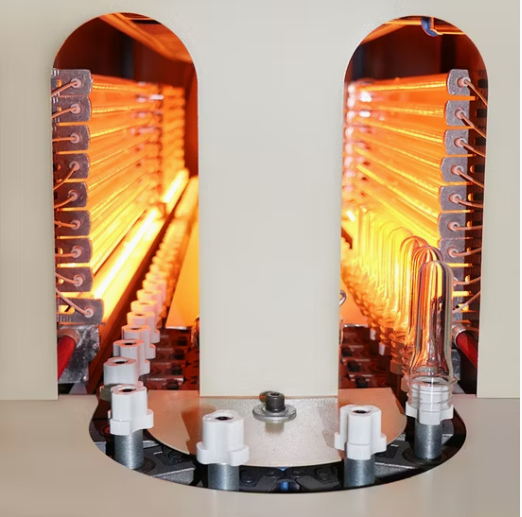
We build replacement lamps specifically for KOSME setups to get the most out of short-wave IR. Think of it like this: when you swap out those old, tired tubes for new high-wattage halogen elements, you’re essentially cranking up the heat flux. More wattage per millimeter means the PET preform hits that sweet spot—the glass transition temperature—a lot faster. But a quick word of caution. You’ve got to match the voltage and length to your machine’s footprint exactly. If you try to force higher wattage through a circuit that can’t handle it, you’re going to fry your contactors. Just double-check your power supply before you go for the upgrade.
The nitty-gritty: Quartz and Connectors
We use heavy-wall quartz glass because it can take the beating of rapid heating and cooling without cracking. For most KOSME machines, we use R7s or SK15 connectors. They’re simple drop-in replacements. You just slide them into the existing sockets and you’re good to go. No messy rewiring, no headaches. Plus, some of our tubes have a special coating. It shifts the heat away from the neck and focuses it right on the body of the preform. It’s a small detail, but it stops the plastic from scorching and cuts down on wasted material.
The one catch: Thermal Load
Here’s the thing: more heat means more stress on the system. While these lamps will definitely shave time off your cycles, they also make the inside of the oven a lot hotter. This is where you need to be careful. Make sure your blower fans are clean and actually working. If your cooling system is clogged with dust, all that extra heat will start warping your reflectors. Keep the air moving, and you’ll keep those production gains.