
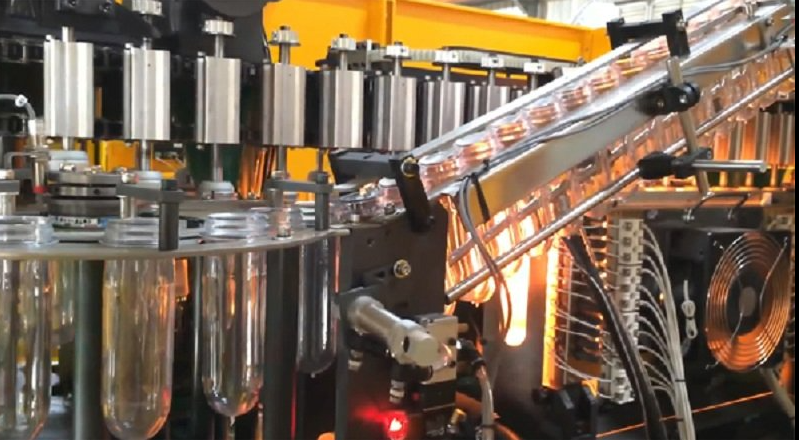
Getting Your Heat Right on Sidel Matrix Lines
Here is the problem with swapping out OEM infrared lamps for aftermarket ones: the heating curve usually shifts. If the wattage or wavelength is even slightly off, your preforms end up uneven. Then you’re staring at bottles with weird wall thickness or that annoying pearlescent haze. It’s a headache you don’t need. That’s why we build our lamps to be exact mirrors of the Sidel Matrix specs.
Why the “1:1 Match” Actually Matters
We don’t just look at the length and voltage and call it a day. We get into the weeds with the wattage density per millimeter. See, a Sidel Matrix machine needs a very specific kind of heat flux to soak into the PET without scorching the surface. We tweak the filament diameter and the coil pitch so the light spectrum hits exactly like the original. **The best part?**When you plug these in, your current oven temperature profiles just work. You won’t be stuck spending three days tweaking heating zones and praying the bottles come out right.
The Nitty-Gritty: Quartz and Fit
We use high-purity quartz because these things take a beating from rapid heating and cooling. And we’ve all been there—trying to force a lamp into a socket that doesn’t quite fit. We hate that. Our connectors are precision-machined so they just drop in. No forcing, no loose contacts, and no scary arcing. We also keep a close eye on the electrical resistance of the tungsten so the voltage drop stays steady.
A Quick Reality Check
Now, here is the thing. High-wattage lamps provide the punch you need for high-speed lines, but they can’t do all the heavy lifting alone. If your reflectors are pitted or covered in grime, even a perfect lamp is going to struggle. You’ve got to keep the oven internals clean to actually get the heat you’re paying for. We build these to last, but remember: they still need a stable power supply. Voltage spikes are the fastest way to burn out a filament, no matter how well it’s made.