

Stop Fighting With Your PET Heater Lamps
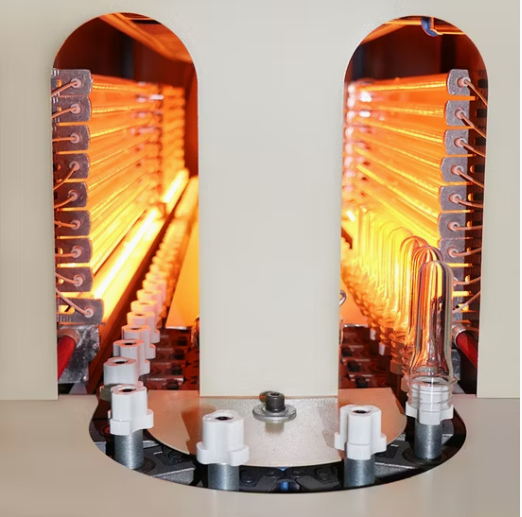
If you’ve spent any time around PET blowing machines, you know the headache. Most of them use short-wave infrared lamps to soften the preforms, but the lamps themselves? They’re usually proprietary. You’re stuck buying from one specific brand, paying their prices, and waiting on their shipping timelines. It’s frustrating. We thought it was time to fix that. We built our quartz elements to be simple drop-in replacements. The goal was easy: make them work with over 95% of the blowing equipment out there, no matter who built the machine.
How we made them “just fit”
It really comes down to two things: the footprint and the electrical load. We didn’t try to reinvent the wheel. Instead, we standardized our tubes around the most common industrial sizes and voltage steps. Whether your system runs on 230V or 400V, we just match the wattage to the length of your oven rack. Now, if you go with a 400V high-voltage tube, you get more power density in a smaller space. That means the preform gets hot faster. But there’s a catch. More heat in the tube means more heat hitting your oven’s chassis. Just double-check that your cooling fans are up to the task. If they aren’t, you might end up warping your lamp holders, and that’s a mess nobody wants to deal with.
The nitty-gritty on materials
We use high-purity quartz glass and fill them with halogen gas. Why? Because it stops the filament from burning out too early by pushing the tungsten back onto the wire. It just lasts longer. But here is where most “universal” lamps actually fail: the connection. We stuck with R7s and Sk15 bases because they’re the industry benchmarks. You can just plug them in. No hacking your sockets, no replacing the wiring harness, and no swearing at the machine for three hours.
Real-world production
These lamps are made for the grind. In a high-cycle blowing environment, you need short-wave radiation that hits the plastic fast to keep your cycle times down. The best part? We keep these in stock. There is nothing worse than a tube popping in the middle of a production run and realizing you’re waiting two weeks for an OEM shipment. With these, you just swap the dead lamp for a new one and get the line moving again. Simple as that.