
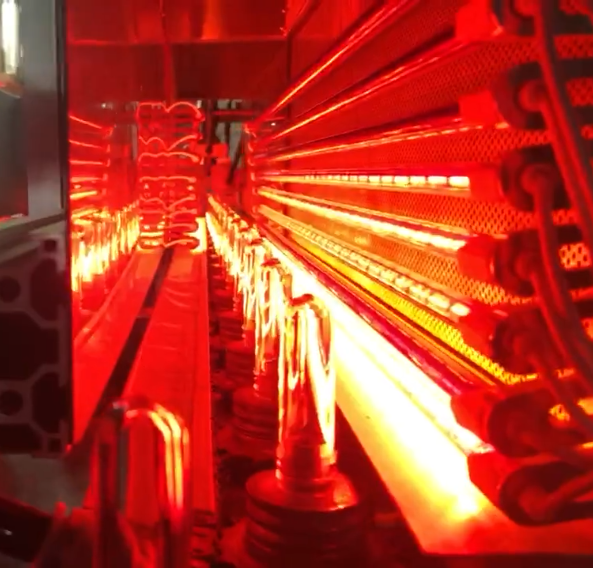
Getting Your Husky HyPET Heaters Right
If you’re running a Husky HyPET system, you know it’s all about speed. But here’s the problem: when you push for high throughput, getting the heat to actually penetrate the preform without burning the surface is a nightmare. That’s why we built our quartz tube heaters differently.
Getting the heat deeper
Most standard lamps just bake the outer skin of the PET. You end up with “cold spots” in the middle, and once you blow the bottle, the wall thickness is all over the place. It’s frustrating. We fixed this by tweaking the tungsten filament and using high-purity quartz to shift the light to short-wave infrared (SWIR). In plain English? The heat actually punches through the plastic instead of just sitting on the surface. Your cycle times get faster. Just a heads-up, though—this extra heat density puts more pressure on your cooling fans. If your airflow isn’t up to the task, you might find your machine frame getting way too hot. Keep an eye on that.
No headaches during install
We made these as drop-in replacements. No one wants to spend their weekend rewiring a whole rack, so we stuck with the industry-standard connectors—usually R7s or SK15. You just swap them out and get back to work. We also picked a quartz glass that doesn’t freak out when the temperature swings. It handles those cold starts without cracking, which saves you from a very bad morning.
Stop the “Zebra Stripes”
In a HyPET setup, consistency is the only thing that matters. If your wattage dips across the tube, you get those annoying “zebra stripes” on the preform. We’ve tuned our voltage and wattage to match the original Husky footprints exactly. The thermal profile stays predictable, the process stays stable, and you see a lot fewer rejects hitting the conveyor belt. It just works.