
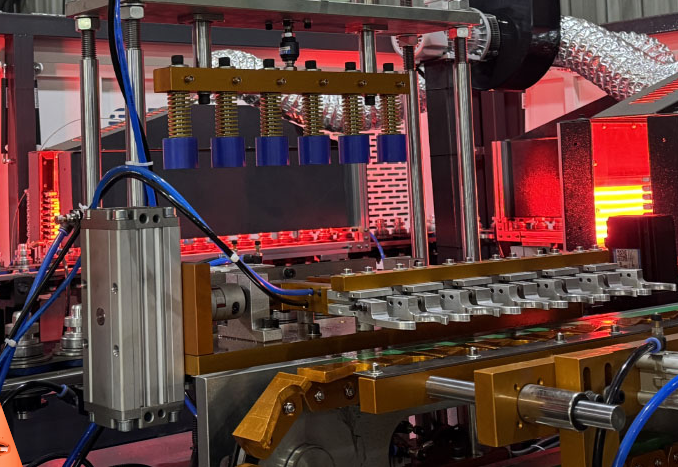
On the blow molding line, uneven preform heating quietly kills output. You know the signs: flashing reject lights, bottle weights that drift all over the place, and the endless cycle of tweaking the heating tunnel. When the infrared lamps aren’t pulling their weight, the whole line pays for it.
What actually matters under the hood
We build our infrared lamps for the realities of PET stretch blow molding. Quartz and halogen emitters are tuned to short-wave and medium-wave profiles, so the energy lands where the preform needs it—fast. Every lamp is specified by voltage, wattage, length, and connector type (R7s, twin-pin, mogul base) to match the OEM footprint. The payoff is stable output, repeatable temperature control, and a predictable service life—no guesswork.
Why this lands on real machines
Compatibility isn’t a promise—it’s a spec sheet. Our lamps fit major blow molding platforms, including Sidel Matrix, Krones Contiform, and Husky HyPET. Dropped into the heating tunnel, they deliver uniform preform heating. That means fewer rejects, steadier cycle times, and less scrap. Plants also see energy use drop because the emitter profile stays inside the process window, so the heaters don’t spend all their time running wide open.
The shop-floor details that make the difference
Installation is straightforward, but alignment is tight. The lamp, reflector, and socket all need to be clean and seated properly to hit the target temperature profile. Before ordering, verify the machine’s voltage and connector—some older models use different pin spacing or terminal arrangements. Plan replacements during scheduled downtime; swapping lamps when the tunnel is cool protects the quartz and keeps heating consistency intact.